Food poverty: Households, food banks and free school meals
July 25 House of Commons Library research briefing – an evidence-based overview of food poverty in the UK, covering household food insecurity, food bank use and free school meals. Latest national statistics, trends over time and disparities by income, region, ethnicity and family circumstances. It also examines the impact of the cost of living crisis and food price inflation, outlining current government policy and funding arrangements. It is designed as an impartial reference to support understanding, analysis and decision-making, drawing on official government data and major charity datasets, including Trussell food bank figures and Department for Work and Pensions statistics.
Stigma in the System
This report, “Stigma in the System,” explores how stigma is embedded in the UK social security system, impacting claimants’ financial security, mental health, and trust in the system. It examines public perceptions, institutional practices, and internalized stigma, revealing how these factors discourage people from claiming benefits they are entitled to. The report highlights the emotional toll of navigating the system and offers recommendations to humanize, simplify, and better resource social security, aiming to reduce stigma and improve outcomes for claimants. Essential reading for policymakers, advocates, and anyone interested in creating a fairer, more supportive welfare system.
Women’s Aid Annual Audit 2025
The Annual Audit 2025 by Women’s Aid provides a comprehensive overview of domestic abuse services in England during 2023-24. It highlights key findings on service demand, provision, funding, and systemic challenges, including a significant shortfall in refuge spaces, underfunding, and barriers faced by marginalized groups. The report also addresses the impact of rising living costs, international conflicts, and the need for sustainable funding and specialist support. It offers insights into the state of the sector, identifies gaps, and advocates for meaningful change to better support women and children affected by domestic abuse.
Unlocking the potential of Big Local partnerships
This report explores the role and impact of Locally Trusted Organisations (LTOs) in the Big Local programme, which empowers residents in 150 areas in England to lead community transformation. LTOs manage funding, provide governance, and support resident-led decision-making. The research highlights the dynamic and complex relationships between LTOs, Big Local partnerships, and Local Trust, emphasizing the importance of trust, clear communication, and effective governance. Recommendations include improving induction processes, regular relationship reviews, and sharing transferable learning to support resident-led change beyond Big Local.
The report advocates for sustained policy and infrastructure support for community-led initiatives
Local Trust – Delivering Big Local: The Role of Locally Trusted Organisations
The Big Local programme uses key service providers, known as Locally Trusted Organisations. Their main role is to manage Big Local funding on behalf of volunteer-led partnerships. This paper sets out what Local Trust knows about Locally Trusted Organisations in general and in relation to resident-led decision making and control. It identifies gaps in knowledge and questions to explore through research. This is mostly focused on instances where the relationship does not work.
The King’s Fund – Understanding Integration: How to Listen to and Learn From People and Communities
Understanding Integration: How to Listen to and Learn From People and Communities is a practical framework that can be used to help support systems listen to and learn from people and communities about their experiences of integrated care. Designed for anyone working within a local health and care system, it is intended to encourage NHS, local authorities and other local partners to work, listen and learn together.
The King’s Fund – Developing Place-based Partnerships
A document from 2021, outlining the 8 principles and implications of place based working, in the context of the emerging Integrated Care Boards (at the time). The document is a practical framework to help partners embed community development with strong links to community cohesion. It emphasises the importance of the lived experiences of people in communities, co-production and place-based delivery. It offers a variety of tools, case studies and prompts that VCFSEs can adapt to improve community outcomes.
Regulator of Community Interest Companies – Annual Report 2023 to 2024
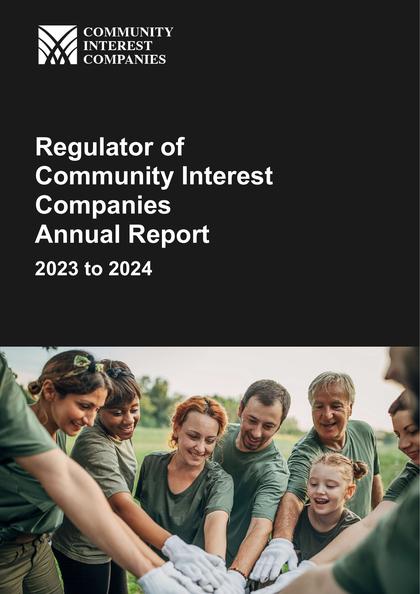
Trends, approvals, dissolutions and case studies of CICs – useful context for VCFSEs weighing CIC structures for traded income.
LGA – Delivering the Armed Forces Covenant Locally (2019)
Ten council case studies; practical learning on governance, pathways and commissioning to support local Armed Forces communities.
Dementia 100: Summary Guidance
The fundamental concept of the Dementia 100: Pathway Assessment Tool is to provide a mechanism for capturing and understanding the characteristics and specific requirements that are considered key to the development and delivery of service and care needs for people living with dementia and their carers. The Dementia 100 extracts and combines pertinent information from multiple sources into a single, consolidated tool for self-assessment. Completed at Place level, it provides a holistic and integrated view of service provision. At system level it aids strategic planning and sharing best practice.