Crowded Isolation and Loneliness – full report
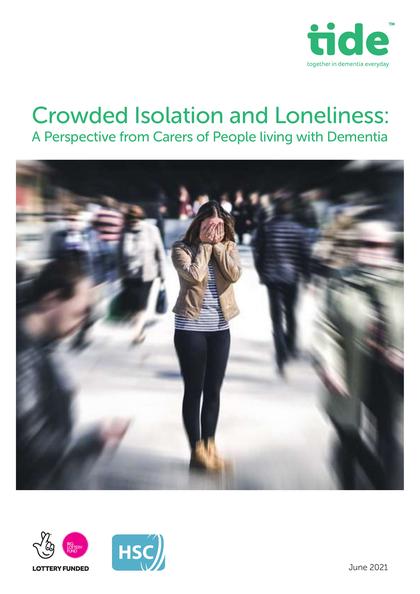
A Perspective from Carers of People living with Dementia
tide (together in dementia everyday) conducted some research looking at the experience of carers of people living with dementia, who are often surrounded with support from many services but feel isolated and crowded with responsibility. This full report explores 6 key themes identified, with additional insights and stories shared. Recommendations for national change are provided
Crowded Isolation a Loneliness Executive Summary
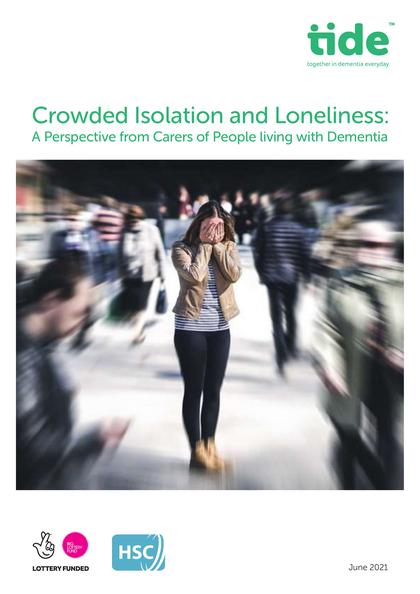
A Perspective from Carers of People living with Dementia
Research undertaken in 2021 to look at the experiences of carers of people living with dementia, who are often ‘engaged’ with many support services, but feel isolated and crowded with responsibility.
An executive summary of the report
Making Shared Care a Reality
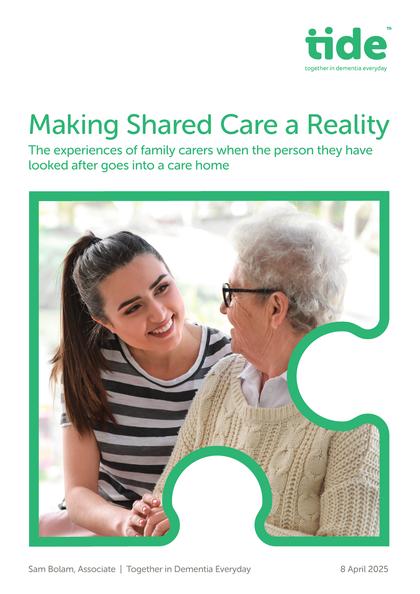
The experiences of family carers when the person they have looked after goes into a care home. Tide (Together In Dementia Everyday) sought feedback from carers once the person they cared for had moved into a care home. It was a lack of consistency across care homes and prompted tide to raise awareness of this disparity and make recommendations for future action.
Dementia and Hope
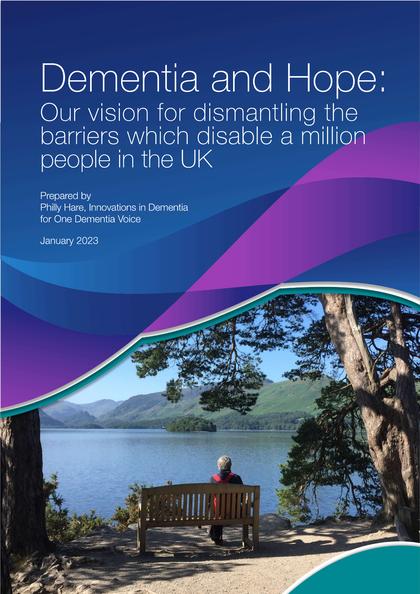
This document sets out the vision of a group of dementia organisations in the UK who have come together as One Dementia Voice. It outlines how these organisations are thinking differently about their support for those living with dementia, and how wider societal barriers can be overcome with the right support. It addresses frequently asked questions and provides suggestions on how to embed ‘Dementia and Hope’ into your organisation. There are also many personal stories and examples of how ‘reasonable adjustments’ can and should be made for people with dementia.
Young Dementia Network – The Angela Project
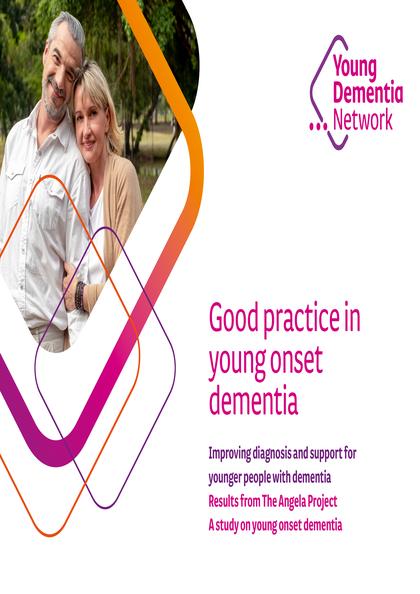
Good practice in young onset dementia
This document summarises the findings from The Angela Project, a 3 year long Alzheimer’s Society funded research study. Researchers consulted young people living with dementia and their families, international clinical experts and service providers in the largest study of young onset dementia ever carried out in the UK. It aims to raise awareness of inequalities and provide evidence-based recommendations for good practice on areas of diagnosis, patient support, post-diagnostic support and service design and delivery.
Libraries and dementia: connecting people with dementia
In 2022, Innovations in Dementia working with a number of libraries in the UK to explore their experiences of dementia and opportunities for further work and connection. This document outlines some key findings from that research, divided into 4 key sections: Key statistics about digital exclusion, ‘how to’ tips on bidding for and managing funded dementia projects, case study examples and ‘how to’ guides for supporting and encouraging people to access simple technology. Whilst aimed at libraries, findings apply to anyone considering dementia support and digital inclusion
Youth Matters – State of the Nation 2025
A report commissioned by DCMS’s Secretary of State, highlighting current patterns, challenges, and wants that are shaping young people’s lives. It draws together voices of 14,000+ young people aged 10-21 (up to 25 for those with Special Educational Needs and Disabilities (SEND)) who engaged in the National Youth Strategy Survey. It also uses insights collated through policy engagement, qualitative data collection and wider evidence collation. The report is partially based on commissioned research that was led by Savanta and their colleagues at My Life My Say and the #iwill Movement (Volunteering Matters and UK Youth) including their Youth Collaborators.
Power Threat Meaning Framework
The Power Threat Meaning Framework is an over-arching structure for identifying patterns in emotional distress, unusual experiences and troubling behaviour, as an alternative to psychiatric diagnosis and classification. The project team’s aim was to produce a foundational document which sets out the philosophical, theoretical and empirical basis for such a framework and describes how it can serve as a conceptual alternative to psychiatric classification in relation to emotional distress and troubled or troubling behaviour.
This is an overview. A full 400+ page report is available from the British Psychological Society.
HYPE 6 Month Update Report
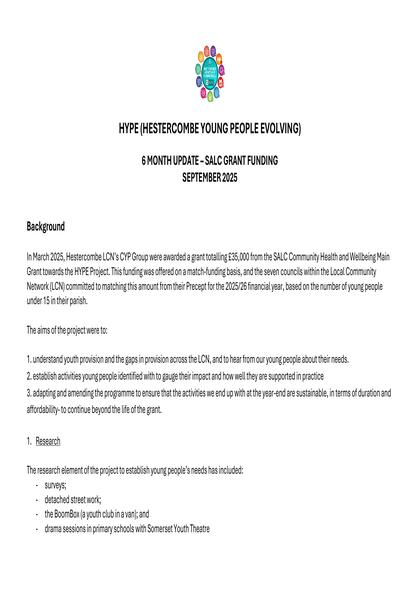
This document is a report detailing the research undertaken by the HYPE (Hestercombe Young People Evolving) group, which is part of the Hestercombe LCN Children and Young People’s group. This project is part-funded by SALC and the parishes within the Hestercombe LCN.
With the findings from this research, we are now able to plan and deliver youth provision to young people in their communities.
The Opportunity Index
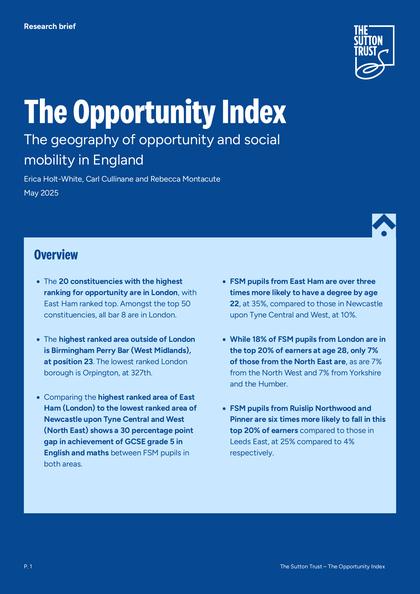
In this report, we provide the most detailed ever look at the geography of opportunity and social mobility in England. We closely examine how socio-economic background, geography and opportunity interact, with data looking at both parliamentary constituency and regional level in England. From educational attainment, to opportunities in higher education and employment, the research compares the outcomes of young people across the country, with a particular focus on the chances of social mobility for young people from lower income homes. Alongside the brief, there is an interactive map which can be accessed at: https://www.suttontrust.com/opportunity-indexinteractive-map